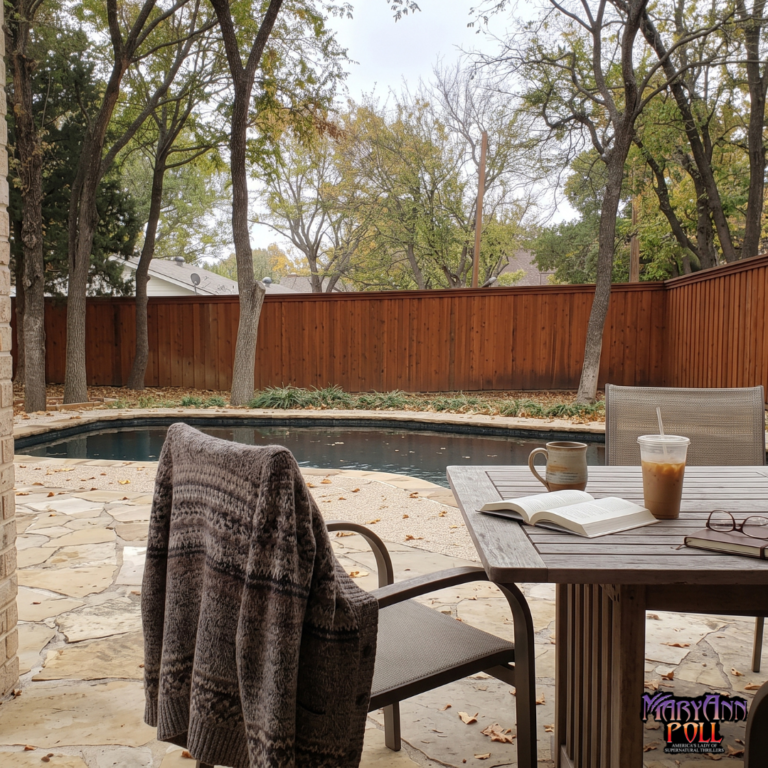
The Haunting of the Cold Coffee
It finally happened this morning. The thermometer on my back porch read sixty-two degrees. To
Dear Reader, I suggest every day, and especially when visiting haunted sites, put on the full armor of God (Ephesians 6:11)
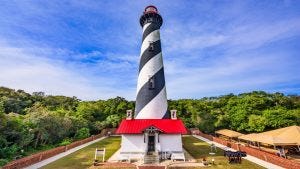
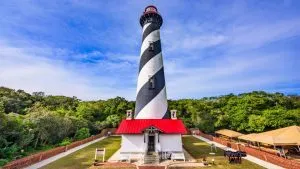
Lighthouse fans know it’s not unusual for these beacons of light to come with dark stories. St. Augustine, Florida, has one such place.
The current St. Augustine Lighthouse is a private navigation aid and an active, working lighthouse. It stands at the north end of Anastasia Island. Built between 1871 and 1874, the tower is the second lighthouse tower in St. Augustine. The American territorial government officially lit the first tower in May 1824.
The history of St. Augustine Lighthouse goes back hundreds of years. Both the Spanish and the British governments operated a significant help to navigation here, including a series of wooden watchtowers and beacons dating back to 1565.
Maps from 1589 detail Sir Francis Drake’s raid of the coast. The 1589 chart mentions the wooden watchtower.
Built to support the nearby Castillo de Marcos, this observation tower survived numerous changes of hands; each new conqueror had their particular idea of not only how the tower should function, but of its design. So, different owners added to, took away, then added back building parts.
Throughout this constant re-design, the watchtower also saw its share of epic sinkings. An example is the HMS Industry, which sank in 1763, taking all of the iron, axes, and grindstones Britain sent to build the new American colonies. Then, there were the 16 ships that wrecked, fleeing the aftermath of the American victory in the Revolutionary War one raucous New Year’s Eve.
Other historic maritime stories include pirate invaders and a Spanish captain who cut off an accused smuggler’s ear.
The current St. Augustine Lighthouse was built after the South’s fall in the Civil War when fears grew over the tower’s state. The lighthouse was structurally unsound, probably due to being remodeled numerous times, so concerns were that it would fall into the ocean.
Luckily, funding was granted, and a new lighthouse was built near the original site in 1874, solving the old one’s structural problems. The new tower saw its share of woes, such as the World War II-era, when the waters were rife with German U-Boats prowling the coastline.
Several untimely deaths occurred at the lighthouse and its grounds, including those of two different keepers.
One of the most famous ghosts is that of lighthouse keeper Peter Rasmussen. Mr. Rasmussen was known for his careful watch over the tower. He also adored the finer things in life. Keeping up with modern luxuries was of utmost importance to him, so he installed bathtubs, closets, and lavatories in the keeper’s house. Even more than the ‘modern’ luxuries, Peter loved cigars. And it is rumored his desire for the finer things continued into the next life. Some visitors to the St. Augustine Lighthouse keeper’s quarters get whiffs of the scent of cigar smoke.
Another report is about the ghost of another lighthouse keeper, Joseph Andreu, who fell to his death from the top of the tower when the scaffolding used to complete paint repairs collapsed. Those who hear the screams of a man falling to his death can undoubtedly attest to the chilling nature of the specter.
Others report seeing a large, dark male figure in the basement. Legend says it is possibly the spirit of a former caretaker who hung himself in the lighthouse.
People report the voice of the 12-year-old daughter of the lighthouse’s builder, who drowned near the building, can sometimes be heard. Some say they hear footsteps shuffling on the gravel and the steps outside the lighthouse.
The most famous lighthouse legend centers on two young sisters, Eliza and Mary, the daughters of Hezekiah Pity. Hezekiah was hired to complete construction work and repairs on the St. Augustine Lighthouse. He used a cart to tote his equipment back and forth.
While preoccupied with his work, Mr. Pity did not notice a group of children, including his daughters, using the cart like a toy. The wagon, unsecured, tumbled down the hill and into the bay. While several of the other children were rescued, Eliza and Mary plunged to a watery grave. People claim to see their spirits and hear laughing and playing on the property and in the lighthouse’s halls.
Current lighthouse staff lock the tower door at night only to find it unlocked in the morning.
St. Augustine Lighthouse is alive-but not just with humans. It seems the ghosts of this place don’t want to leave, and they want to be remembered.
Source: Nightlyspirits.com; Wikipedia; The Hartford Extra Mile; Liveabout.com
Until Next Time,
Originally published at https://www.maryannpoll.com.
It finally happened this morning. The thermometer on my back porch read sixty-two degrees. To

According to the tables they print in the back of financial brochures, I should be